
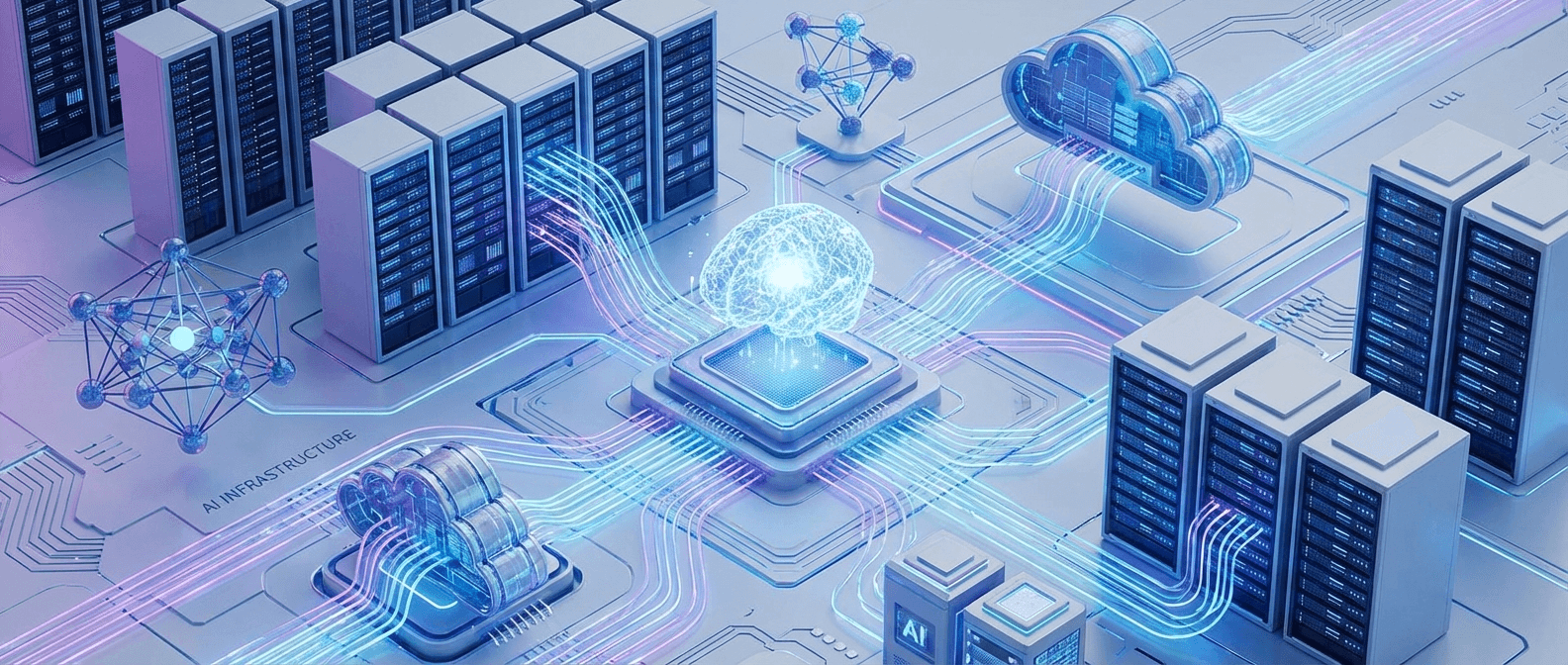
The relentless march of artificial intelligence is no longer a futuristic fantasy; it's a present-day reality reshaping industries and redefining possibiliti...
The relentless march of artificial intelligence is no longer a futuristic fantasy; it's a present-day reality reshaping industries and redefining possibilities. From self-driving cars to personalized medicine, AI is rapidly evolving, but behind every groundbreaking AI application lies a critical, often overlooked component: robust AI infrastructure. This infrastructure, encompassing hardware, software, and the underlying data architecture, is the engine that powers modern intelligence. Understanding its current state and future trajectory is crucial for businesses seeking to leverage the transformative potential of AI.
The Evolving Landscape of AI Infrastructure
The demands on AI infrastructure are constantly growing. Early AI models were relatively simple, capable of running on standard server setups. However, the emergence of deep learning and large language models (LLMs) has fundamentally changed the game. These models require massive computational power for both training and inference, pushing the limits of existing infrastructure and driving innovation in specialized hardware and software.
Several key trends are shaping the current landscape:
- The Rise of Specialized Hardware: General-purpose CPUs are no longer sufficient for handling the complex calculations required by modern AI. GPUs (Graphics Processing Units), initially designed for gaming, have become the workhorses of AI training due to their parallel processing capabilities. Furthermore, specialized AI accelerators, like TPUs (Tensor Processing Units) developed by Google, are gaining traction, offering even greater performance and efficiency for specific AI tasks.
- The Cloud as the Dominant Platform: Building and maintaining on-premise AI infrastructure is expensive and complex. Cloud providers like AWS, Azure, and Google Cloud are offering increasingly sophisticated AI-as-a-Service (AIaaS) platforms, providing access to cutting-edge hardware, pre-trained models, and development tools. This allows businesses to focus on developing their AI applications without the burden of managing the underlying infrastructure.
- The Importance of Data Management: AI models are only as good as the data they are trained on. Effective data management, including data collection, cleaning, labeling, and storage, is crucial for building accurate and reliable AI systems. This includes developing robust data pipelines and implementing strategies for handling large datasets and ensuring data privacy.
These trends highlight the shift towards a more specialized, scalable, and data-centric approach to AI infrastructure. As AI models continue to grow in complexity, the need for efficient and cost-effective infrastructure solutions will only intensify.
The Shift to AI-Native Architectures
The traditional approach of retrofitting existing infrastructure to accommodate AI workloads is becoming increasingly unsustainable. The future of AI infrastructure lies in AI-Native architectures, designed specifically to support the unique demands of AI. This involves a fundamental rethinking of how hardware, software, and data are integrated to optimize performance, scalability, and efficiency.
Key Takeaway: Businesses that embrace AI-Native architectures will gain a significant competitive advantage by unlocking the full potential of their AI investments.
AI-Native architectures are characterized by:
- Hardware-Software Co-design: Optimizing hardware and software together to maximize performance and efficiency. This includes developing specialized compilers and runtime environments that are tailored to specific AI accelerators.
- Scalable and Distributed Computing: Leveraging distributed computing techniques to handle the massive datasets and computational workloads associated with modern AI. This includes using technologies like Kubernetes and Apache Spark to orchestrate and manage distributed AI training and inference.
- Data-Centric Approach: Prioritizing data management and governance to ensure data quality, security, and compliance. This includes implementing automated data pipelines, data lineage tracking, and access control mechanisms.
Learn more about Meet our team.
The development of AI-Native infrastructure is still in its early stages, but it represents a fundamental shift in the way AI is deployed and managed.
Learn more about AI implementation services.
Business Impact and Expert Predictions
Learn more about AI training and workshops.
The evolution of AI infrastructure has profound implications for businesses across all industries. By leveraging advanced AI infrastructure, companies can:
- Accelerate Innovation: Faster training and inference speeds enable faster iteration and experimentation, leading to quicker development of new AI-powered products and services.
- Improve Operational Efficiency: AI can automate tasks, optimize processes, and improve decision-making, leading to significant cost savings and increased productivity.
- Enhance Customer Experiences: AI can personalize customer interactions, provide more relevant recommendations, and improve customer service, leading to increased customer satisfaction and loyalty.
Experts predict that the market for AI infrastructure will continue to grow rapidly in the coming years. According to a recent report by Gartner, worldwide spending on AI infrastructure is projected to reach $118 billion by 2025. This growth will be driven by the increasing adoption of AI across various industries, as well as the growing demand for more powerful and efficient AI infrastructure solutions.
Key Takeaway: Investing in robust AI infrastructure is essential for businesses that want to stay ahead of the curve and capitalize on the transformative potential of AI.
Conclusion: Building the Future of AI with NeuralEDGE
The future of AI is inextricably linked to the evolution of its underlying infrastructure. As AI models become more complex and data volumes continue to grow, the need for specialized, scalable, and data-centric infrastructure solutions will only intensify. Understanding these trends and embracing AI-Native architectures is crucial for businesses seeking to leverage the full potential of AI.
At NeuralEDGE, we understand the complexities of AI infrastructure and are dedicated to helping businesses build and optimize their AI deployments. We offer a range of services, from infrastructure consulting to AI model development and deployment, to help you unlock the power of AI and achieve your business goals.
Ready to explore how NeuralEDGE can help you build the AI infrastructure you need to succeed? Contact us today for a free consultation and discover how we can help you transform your business with the power of AI. Visit neuraledge.in to learn more.
Topics
Written by
NeuralEDGE Team
Published on Feb 15, 2026 · 5 min read · 925 words