
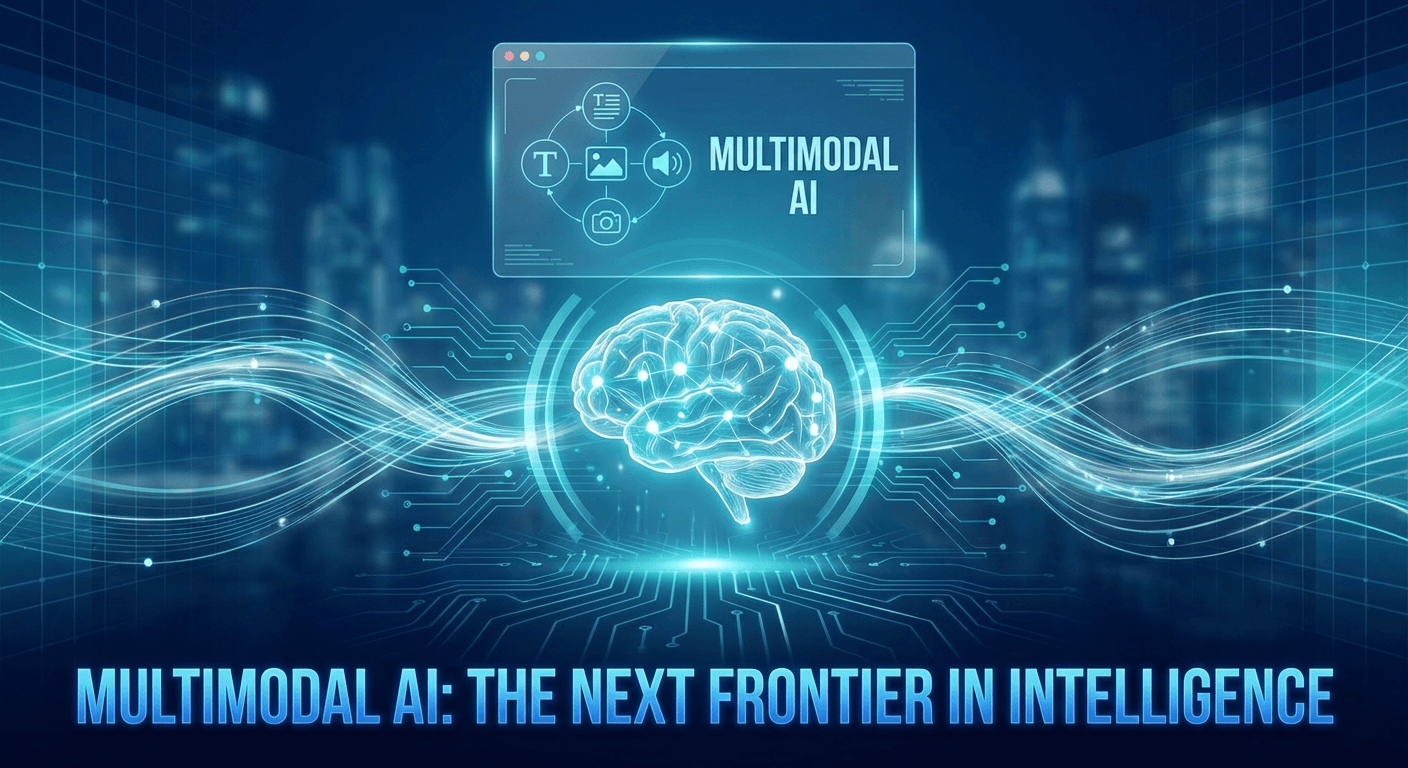
The world of Artificial Intelligence is in constant flux, a whirlwind of innovation that reshapes industries and redefines possibilities. While single-modali...
The world of Artificial Intelligence is in constant flux, a whirlwind of innovation that reshapes industries and redefines possibilities. While single-modality AI models (those focused on one type of data like text or images) have achieved remarkable feats, the future belongs to something more powerful: multimodal AI. This emerging field, capable of processing and understanding information from multiple data sources simultaneously, promises to unlock a new era of intelligence and revolutionize how businesses operate.
Understanding the Rise of Multimodal AI
For years, AI systems have excelled at tasks within specific domains. Image recognition software could identify objects with incredible accuracy, natural language processing could translate languages fluidly, and speech recognition could transcribe conversations with near-perfect precision. However, real-world understanding requires more than isolated skills. Humans seamlessly integrate information from sight, sound, touch, and smell to make sense of their surroundings. Multimodal AI aims to replicate this capability, bridging the gap between narrow AI and a more holistic, human-like understanding.
Think of it this way: a single image might show a person smiling. A text description might say, "He is happy." But combining the image and the text allows an AI to understand the reason for the happiness – perhaps he just won an award, or he is spending time with loved ones. This deeper contextual understanding is what sets multimodal AI apart.
Key Takeaway: Multimodal AI moves beyond isolated data processing to achieve a more comprehensive and contextual understanding of the world.
This trend is fueled by several factors:
- Increased Data Availability: The explosion of data from various sources (images, audio, video, text, sensor data) provides the raw material needed to train multimodal models.
- Advancements in Deep Learning: Deep learning architectures, particularly transformers, have proven highly effective in processing and fusing data from different modalities.
- Growing Business Demand: Businesses are recognizing the potential of multimodal AI to improve decision-making, personalize customer experiences, and automate complex tasks.
The Business Impact: From Retail to Robotics
The potential applications of multimodal AI are vast and span across numerous industries. Consider these examples:
- Retail: Imagine a system that analyzes video footage of shoppers in a store, combined with sales data and customer reviews. This allows retailers to understand customer behavior in real-time, optimize product placement, and personalize marketing campaigns.
- Healthcare: Multimodal AI can analyze medical images (X-rays, MRIs) along with patient history and genetic information to improve diagnosis accuracy and personalize treatment plans.
- Manufacturing: Combining visual data from cameras with sensor data from machines allows for predictive maintenance, identifying potential equipment failures before they occur.
- Robotics: Multimodal AI is crucial for developing robots that can navigate complex environments, interact with humans naturally, and perform tasks requiring dexterity and understanding of context. The rise of AI-Native robotics is heavily dependent on advancements in this field.
The ability to synthesize information from multiple sources allows businesses to gain deeper insights, automate complex processes, and create more personalized and engaging customer experiences. This translates to increased efficiency, reduced costs, and improved profitability.
Expert Perspectives and the Future Landscape
Learn more about Case studies.
Experts predict that multimodal AI will become increasingly prevalent in the coming years, driving innovation across various sectors. Dr. Fei-Fei Li, a leading AI researcher at Stanford University, has emphasized the importance of building AI systems that can "see, hear, and understand the world in the same way that humans do." This vision aligns perfectly with the goals of multimodal AI.
Learn more about Meet our team.
Furthermore, the emergence of foundation models trained on massive datasets across multiple modalities is accelerating progress. These models can be fine-tuned for specific tasks with relatively little data, making multimodal AI more accessible to businesses of all sizes. The AI-Native approach of building systems from the ground up with multimodal capabilities in mind will become increasingly common.
Learn more about Thought Leadership.
However, challenges remain. Training multimodal models requires significant computational resources and large datasets. Ensuring the fairness and ethical implications of these systems is also crucial, as biases in one modality can be amplified when combined with others.
Key Takeaway: Multimodal AI is poised to become a dominant force in the AI landscape, driven by advancements in deep learning and the increasing availability of multimodal data.
Embracing the Multimodal Revolution
The shift towards multimodal AI is not just a technological trend; it's a fundamental shift in how we approach intelligence. Businesses that embrace this revolution will be well-positioned to gain a competitive advantage in the years to come.
Here are some steps businesses can take to prepare for the multimodal future:
- Invest in data infrastructure: Ensure you have the systems and processes in place to collect, store, and process data from various sources.
- Explore multimodal AI applications: Identify areas where multimodal AI can address specific business challenges and create new opportunities.
- Partner with AI experts: Leverage the expertise of companies like NeuralEDGE to develop and deploy multimodal AI solutions tailored to your specific needs.
- Foster an AI-Native culture: Encourage experimentation and learning within your organization to build internal expertise in multimodal AI.
The future of AI is multimodal. By understanding the potential of this transformative technology and taking proactive steps to prepare, businesses can unlock new levels of intelligence and drive unprecedented innovation.
Ready to explore how multimodal AI can transform your business? Contact NeuralEDGE today for a free consultation and discover how our expert team can help you harness the power of the next frontier in intelligence.
Topics
Written by
NeuralEDGE Team
Published on Feb 10, 2026 · 5 min read · 901 words